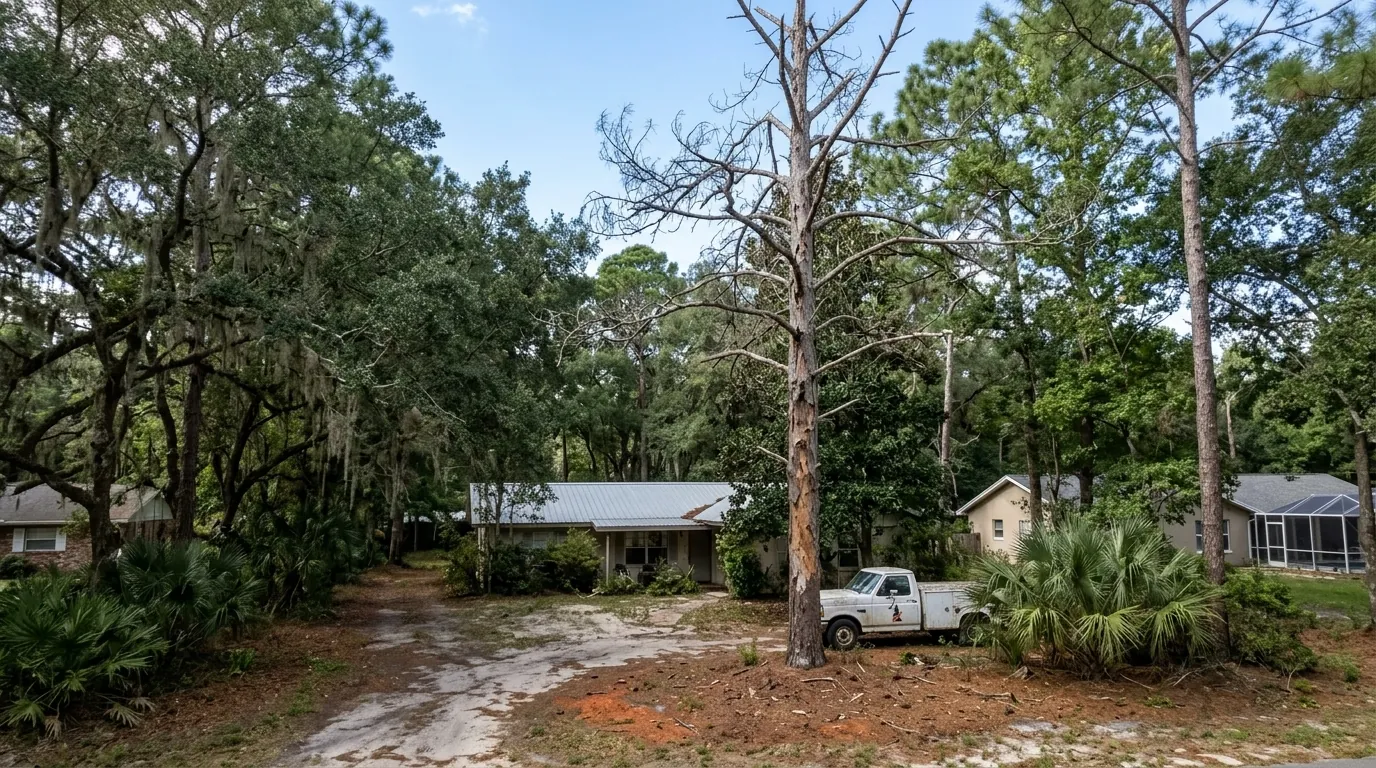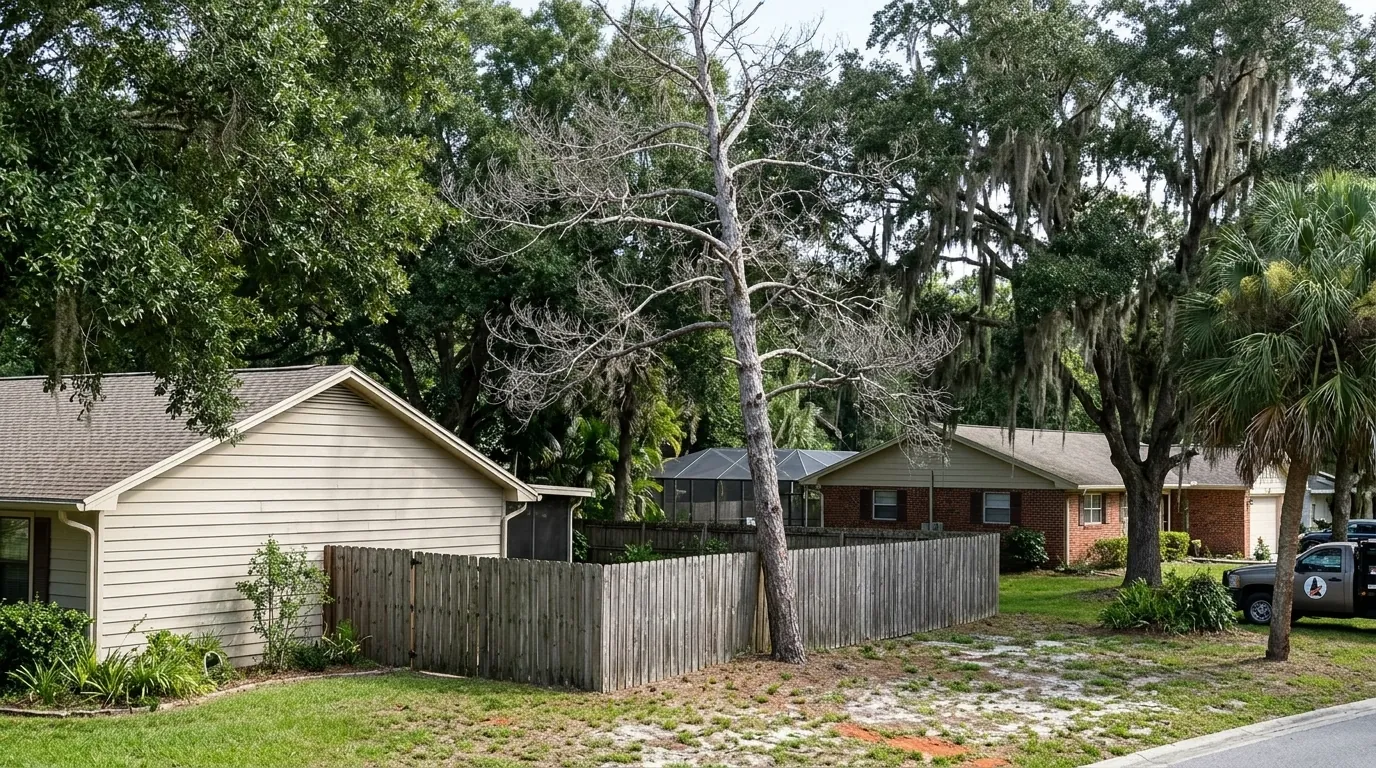
Every job is different, but most removals around Gainesville, FL follow the same basic sequence. Knowing it ahead of time helps you plan where to park, what to move and when it's safe to step back outside.
Before Tree Removal Day: The Paperwork and Calls
A lot of the work happens before anyone shows up with a saw. By the time the date is set, these should be settled:
- A fixed written price that lists the trees, the method, stump grinding if included, and haul-off.
- Permits or HOA approval where the tree is regulated. Inside city limits that usually means heritage trees; in unincorporated Alachua County the size triggers depend on lot size. Associations often need their own sign-off.
- A utility disconnect if the service line to the house runs through the tree. The utility has to do this, and it may take a few days to schedule.
- Sunshine 811 locates if a stump will be ground. Florida asks anyone digging or disturbing the ground to contact 811 two full business days ahead of time; Saturdays, Sundays and holidays are skipped in that count. Grinding goes well below the surface, so we treat it the same way.
Tree Removal Day Morning: Arrival and the Safety Briefing
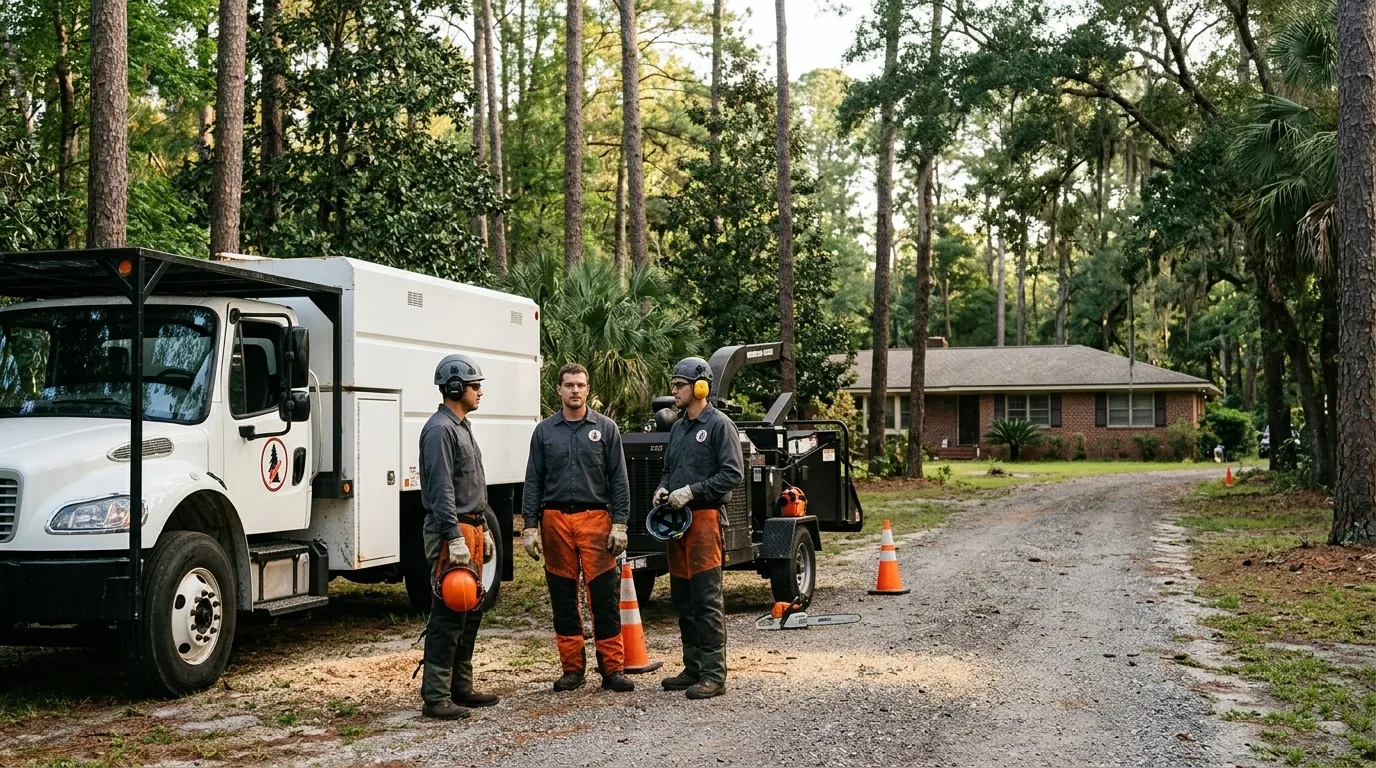
Crews usually arrive early and park the truck and chipper as close to the tree as the driveway or street allows. Before any cutting, the crew leader walks the site and holds a short job briefing. The tree care industry's safety standard, ANSI Z133, revised in 2026, expects that kind of briefing so everyone knows the plan, the hazards and their role.
During the walk-through you'll typically be asked about:
- Septic tanks, drain fields and sprinkler lines in the work area
- Invisible dog fences, buried lighting and anything else under the lawn
- Which gate to use and where pets will be
- Anything near the tree that matters to you, such as a plant bed or a stepping-stone path
Then the crew sets the work zone: cones or caution tape at the edge of the drop area, ground mats or plywood where heavy pieces will land or equipment will roll, and tarps over plant beds if needed.
How a Tree Is Taken Down, Step by Step
The method depends on the space around the tree, but the order is consistent:
- Limbing. A climber or a bucket truck operator strips the branches, usually starting low and working upward or trimming from the tips inward. Small ones are dropped into the clear zone. Larger ones are tied off and lowered on rigging lines.
- Topping out. Once the crown is gone, the top of the trunk is cut off in a controlled piece.
- Sectioning the trunk. The trunk comes down in rounds or longer logs, sized for the space below and for the equipment that will move them.
- The final cut. When there's room, the last tall section can be felled in one piece. A notch on the side facing the fall direction and a back cut leave a strip of wood called the hinge, which steers the trunk as it goes over.
On open lots, such as the larger acreage parcels in Millhopper where tall pines stand well away from the house, a whole tree can often be felled after limbing. In a tight yard, the entire tree may come down in pieces no larger than a person can carry. When nothing can be lowered safely, a crane lifts the sections out instead. Our crane tree removal page explains when that's worth it.
What you'll hear and see
Chainsaws, the chipper, two-way radios or hand signals, and a lot of called-out warnings before each cut. Keep children and pets indoors, and stay outside the cones until the crew leader waves you in. Wood can bounce or roll farther than people expect.
Chipping, Hauling and Gainesville's Debris Rule
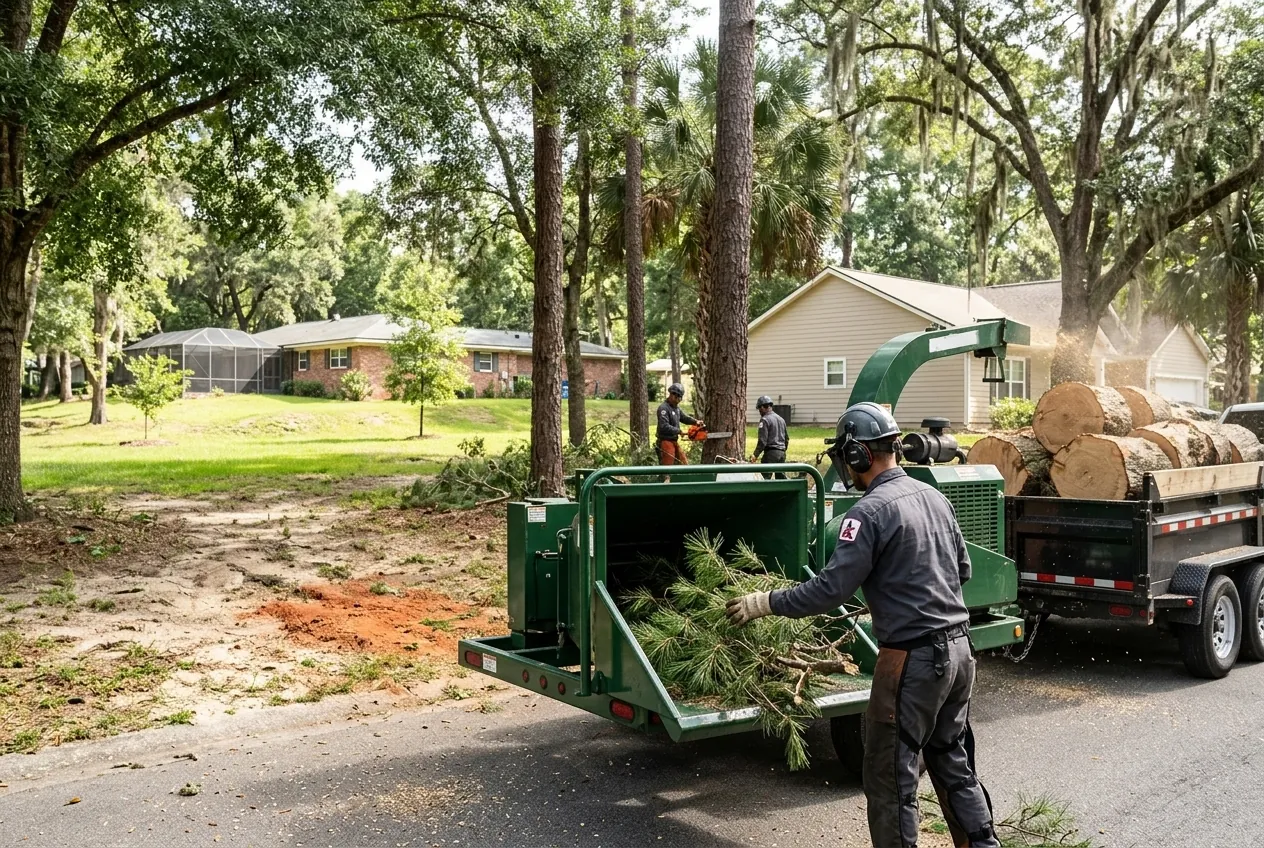
While the climber cuts, the ground crew drags brush to the chipper and loads logs onto a trailer or into a dump truck. Branches up to several inches thick go through the chipper. Trunk rounds usually leave as logs, unless you've asked to keep some for firewood.
Haul-off isn't a courtesy in Gainesville. A city ordinance makes it unlawful for anyone working as a contractor to produce tree debris without removing it, and the city's curbside yard waste service won't collect what a hired crew cuts. A cheap quote that leaves logs by the road just hands the disposal job back to you. Make sure the quote says everything goes.
| Stage | What you'll see | Rough time for one medium tree |
|---|---|---|
| Setup and briefing | Trucks parked, cones out, mats down | 15 to 30 minutes |
| Limbing and rigging | Climber or bucket in the tree, limbs lowered | 1 to 3 hours |
| Trunk sectioning or felling | Rounds coming down, or one controlled fall | 30 minutes to 2 hours |
| Chipping and loading | Brush through the chipper, logs on the trailer | Runs alongside the cutting |
| Stump grinding | Grinder working the stump below grade | 20 minutes to 1.5 hours per stump |
| Cleanup and walk-through | Raking, blowing, a final look together | 20 to 45 minutes |
A small tree with open access can be done in a couple of hours. A large tree over a house, with every piece lowered on ropes, can take a full day or more.
Stump Grinding on Tree Removal Day
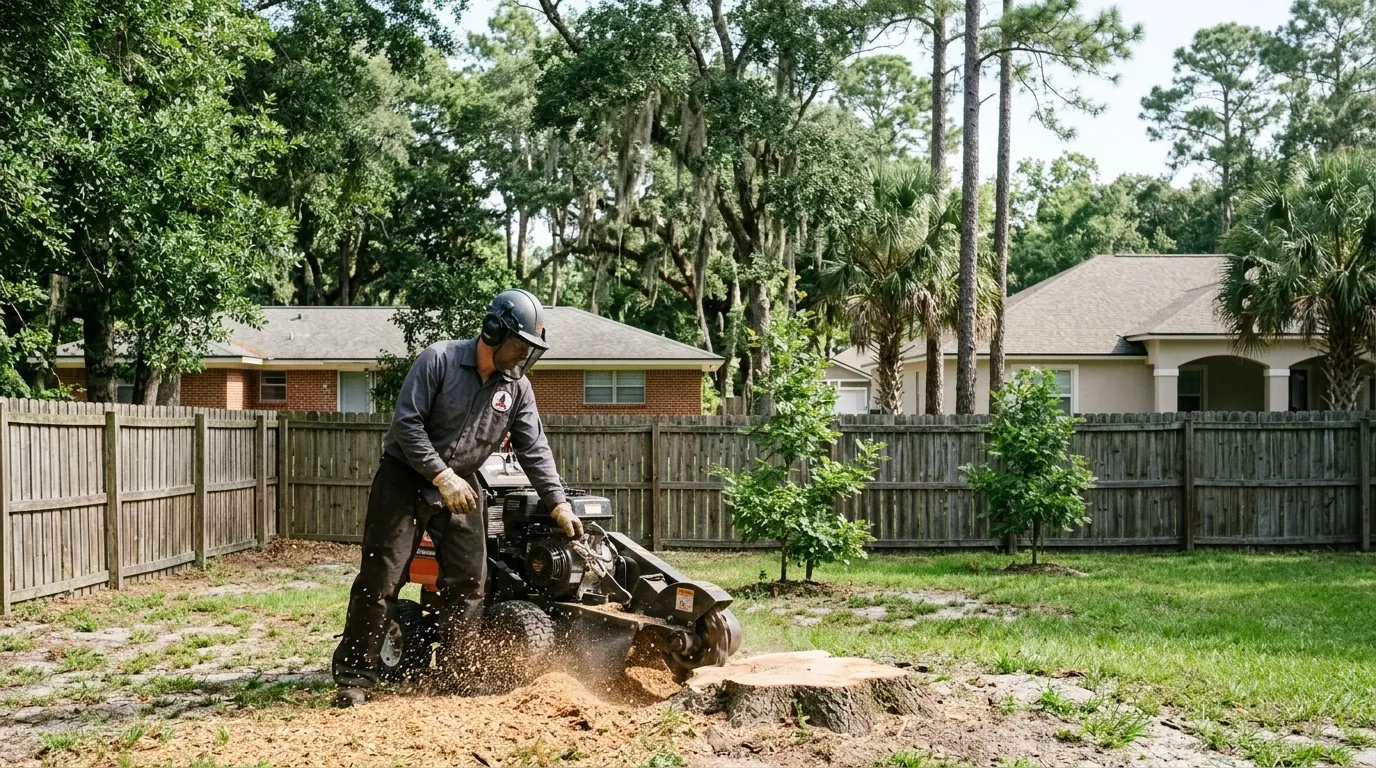
If stump grinding is on the quote, it usually happens right after the trunk is down. The grinder chews the stump and the top of the main roots into chips below the soil line. You'll be left with a mound of grindings mixed with soil, which can be raked flat, hauled off for an added charge, or used as mulch elsewhere. Our guide to stump grinding vs. stump removal explains the options.
Weather, Soft Ground and Other Tree Removal Day Delays
Summer afternoons here bring lightning, and crews come out of the tree when storms approach. High wind is another stop signal, since it makes rigged pieces swing. Soggy ground matters too. Low, flat areas such as parts of Ironwood, where water can sit after heavy rain, may need extra mats or a later date so heavy equipment doesn't leave ruts. If we reschedule, it's to protect your yard and the crew, and the written price doesn't change.
The Final Walk-Through After Tree Removal
Before the crew leaves, the lead should walk the yard with you. Look for:
- Sawdust and small debris raked and blown off the lawn, driveway, roof edges and gutters
- No damage to fences, screens, gutters or plants that wasn't there before
- The stump ground to the depth you agreed on, if grinding was included
- Ruts or mat marks noted, with any repair agreed
- Wood you asked to keep stacked where you wanted it
Payment is normally due when the job is complete and you're satisfied with the cleanup. Be cautious of anyone asking for full payment before the work starts.
How to Prepare Your Yard for Tree Removal Day
- Move vehicles out of the driveway and away from the work area the night before.
- Clear patio furniture, toys, grills and potted plants from under the tree.
- Flag sprinkler heads, septic lids and anything buried.
- Unlock gates, and keep pets inside for the whole job.
- Give your neighbors a heads-up about noise and street parking.
- Check your HOA's allowed work hours if you have one.
Larger properties, like many lots in Newberry, sometimes combine a removal with clearing an overgrown fence line or a stand of invasive trees on the same day. If that's on your list, ask about lot and land clearing so it can be priced together.
For more on how we take trees down, see our takedown methods, or read about removing a tree close to your house. When you're ready, request a free estimate.