By Tree Type · Palms
Palm Tree Removal in Gainesville, FL
Palms are not trees in the usual sense, and removing one is a different job. We take out dead, diseased and unwanted palms, then deal with the root ball so the spot is ready for whatever comes next.
- Typical range
- $250 – $1,200
- Common palms
- Cabbage, queen, Washingtonia
- Diseases
- Lethal bronzing, Ganoderma
- Root ball
- Ground out or dug, your choice
Palm Tree Removal Gainesville: How Palms Are Different
A palm has no bark, no growth rings and no branches. It grows from a single bud at the top, called the heart. If that bud dies, the whole palm dies, no matter how green the older fronds look for a while. Its trunk is a bundle of fibers rather than wood, and instead of a taproot and spreading woody roots, it has a dense mass of thin roots near the base, the root ball.
Those differences shape how palms come out. A palm trunk is heavy and full of water, cuts differently from wood, and does not decay into the ground the way an oak stump does. This page covers palm removal specifically. For other trees, the general takedown methods page applies.
Gainesville Palm Removal: The Palms We See
- Cabbage palm (sabal). Florida's state tree and the most common palm in local yards. Tough and wind-firm, but vulnerable to lethal bronzing.
- Queen palm. Popular for its feathery fronds, but tender to hard freezes. A cold snap can kill the bud and leave a dead palm that looks alive for weeks.
- Washingtonia (Mexican fan palm). Very tall and thin, often planted near houses decades ago, and now well above the roofline.
- Pindo palm and Canary Island date palm. Heavy, spiny palms that need careful handling. The date palm's fronds and leaf bases are sharp.
Cold-damaged palms: wait or remove?
After a hard freeze, queen palms and other tender palms can look dead within days as the fronds brown. That does not always mean the bud is gone. If the spear leaf in the center still feels firm and does not pull out, it is often reasonable to wait until warm weather and see whether new growth emerges. If the spear pulls out easily, smells sour or new growth never appears, the palm is dead and should come down before the rotting crown drops.
Palm Tree Removal for Diseased Palms in Alachua County
Lethal bronzing
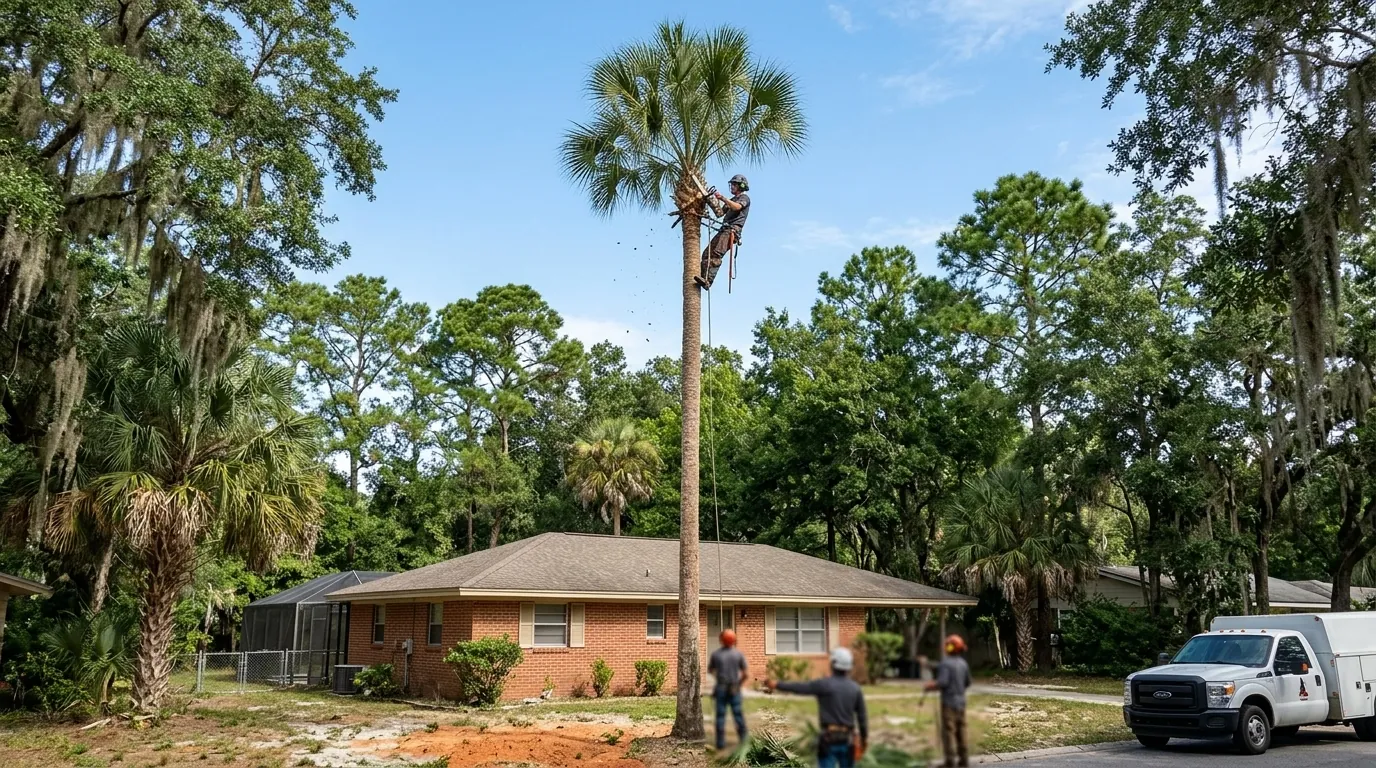
Lethal bronzing is a bacterial disease spread by a small planthopper. It was first detected in Florida in Tampa in 2006, and UF/IFAS lists Alachua County among the counties with confirmed cases. Cabbage palms are among the species it kills. Symptoms usually start with fruit dropping early, then lower fronds turning bronze or reddish-brown, moving upward until the spear leaf dies. UF/IFAS says infected palms do not recover and recommends removing them. A lab test is needed for confirmation, and UF offers one.
Ganoderma butt rot
Ganoderma butt rot is a fungus that decays the lower trunk. The usual sign is a shelf-like conk growing low on the trunk. By then, decay inside is often advanced. UF/IFAS says there is no cure. The recommended response is to remove the palm and as much of the trunk, stump and roots as possible, avoid replanting a palm in the same spot because the fungus persists in soil, and clean tools that touched the infected wood.
Palm Tree Removal and the Root Ball
Once the trunk is down, you have three choices for what is left:
- Grind it. A stump grinder chews the trunk base and root ball down below grade. This is the usual choice and leaves a spot you can fill and sod. Palm stumps grind differently from wood, more like stringy fiber, so the process looks a little different, but the result is the same. See stump grinding.
- Dig it out. Some customers want the root ball removed entirely, especially before planting something new. That takes digging and more labor, and it is quoted separately.
- Leave it. A palm stump cut flush to the ground will eventually break down. It takes time, and in a lawn it can be a trip hazard. Avoid this option for a palm with Ganoderma.
Tall Palm Tree Removal in Gainesville
Short palms are usually cut at the base and laid down in one piece. Tall palms near houses, pools and power lines need more care. A climber ascends, removes the fronds and the heavy crown, then cuts the trunk into sections from the top, lowering or dropping each one into a clear area. Palm trunk sections are heavy for their size, so pieces stay short near structures. Very tall Washingtonias near wires may need coordination with GRU or Clay Electric, or a crane when there is no room to work.
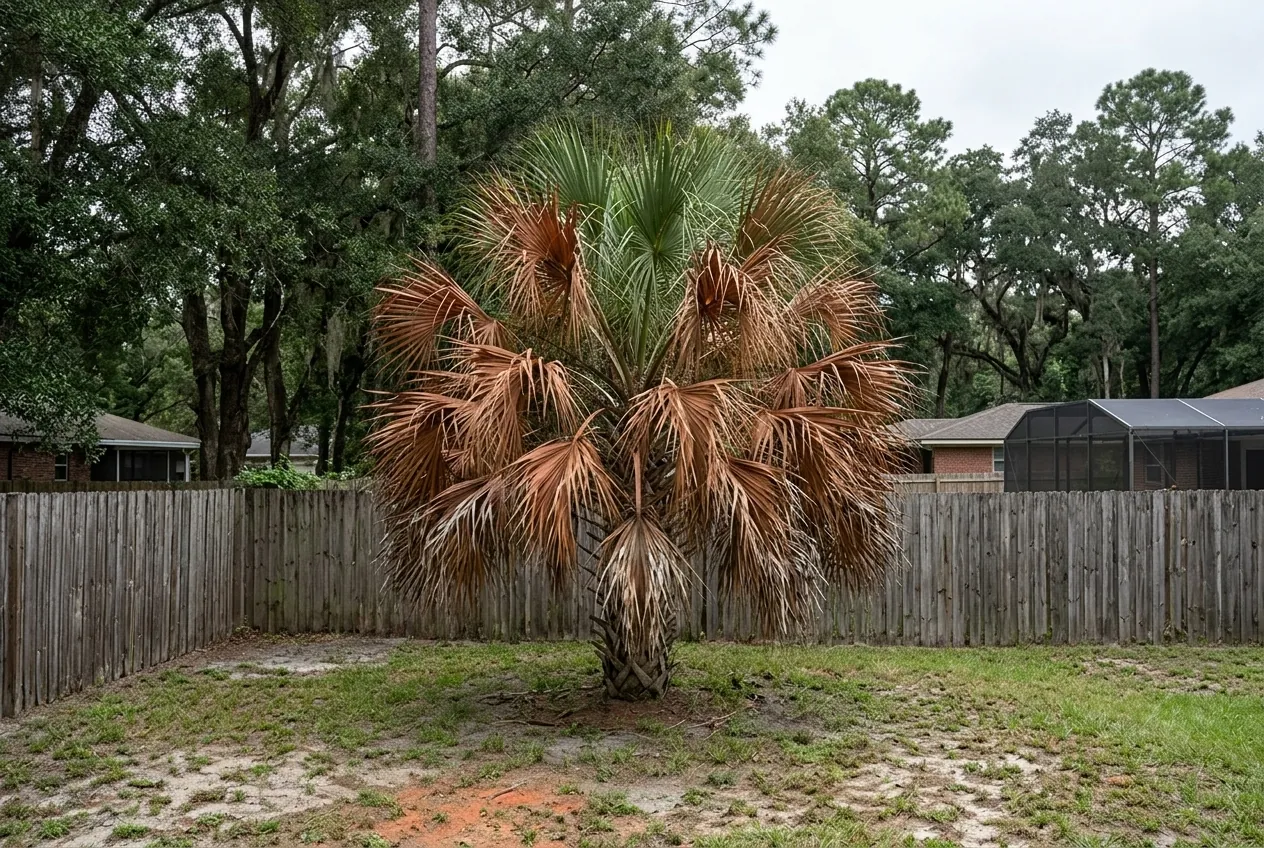
Palms beside pools and screened enclosures need extra planning. Fronds, fruit stalks and trunk sections can tear a screen panel or crack pool coping if they are dropped. We lower those pieces or carry them out by hand, and we cover the pool when debris could blow in. Spiny palms, like the Canary Island date palm, are handled with heavy gloves and are never chipped near a pool deck where sharp fragments could scatter.
In planned communities such as Haile Plantation, palms often stand at entries and along pool decks, and HOA rules may require approval or replacement. Along the older streets of Kirkwood, tall fan palms planted decades ago now tower over small ranch homes and their wires.
Healthy palms that are simply in the way
Not every palm we remove is sick. Some sit where a new pool, driveway or addition is going. Some have grown into the eaves and keep scraping the roof or shedding heavy fronds into gutters. Others were planted too close together years ago and now crowd each other. Removing a healthy palm is the same job as removing a dead one, just with firmer fiber and less risk during the climb. If you would like to keep a smaller palm instead, say so early and we will price around it.
Palm Tree Removal Cost in Gainesville
Palm removal prices depend mostly on height, access and what is underneath, plus what you want done with the root ball.
| Job | Typical range | What moves the price |
|---|---|---|
| Short palm, open access | $250–$500 | Trunk height and haul distance |
| Mid-height palm near a house or pool | $500–$900 | Sections that must be lowered |
| Tall Washingtonia or heavy date palm | $800–$1,200 | Height, spines and nearby wires |
| Diseased palm with contained haul-off | $250–$1,200 | Size, plus careful handling of infected material |
| Grinding the stump and root ball | $95–$450 | Diameter and depth wanted |
| Digging out the root ball | Quoted on site | Size, soil and access |
Several palms in one visit cost less per palm than one at a time. If palms are part of a bigger yard cleanup, ask about combining them with other dead tree removal work.
Palm Tree Removal Gainesville Homeowners Can Book
Send a photo of the whole palm, the crown and the base, plus anything that looks unusual, like conks or bronzed fronds. We will tell you what we see, whether the palm is likely beyond saving, and give you a written price that covers the root ball. For what removal day looks like, read what happens on tree removal day. For other tree removal around Gainesville, visit the homepage, or get your estimate.
Palm Tree Removal Gainesville FAQ
Straight answers before you call.
Look at the newest growth in the center, the spear leaf. If it is brown, wilted or pulls out easily, the bud is likely dead, and the palm will not recover even if older fronds stay green for a while. Cold-damaged queen palms and palms with lethal bronzing often show this pattern.
UF/IFAS says infected palms do not recover, and it recommends removal. A lab test is needed to confirm the disease. Antibiotic injections are sometimes used to protect healthy palms nearby, but they do not cure a palm that already has symptoms.
If the palm had Ganoderma butt rot, UF/IFAS advises against planting another palm in the same spot because the fungus persists in the soil. A non-palm tree or shrub is a better choice. For other causes of death, replanting is usually fine once the root ball is ground or removed.
We usually grind the stump and root ball below grade so the area can be filled and sodded. If you want the root ball completely dug out, for example before planting something new, we can quote that separately.
Most palm removals fall between $250 and $1,200, depending on height, access and what sits underneath. Grinding the stump and root ball adds $95 to $450. You get a written price that covers everything before the work starts.
Palm rules vary, and HOA landscape rules often cover palms even when local codes do not. We check the rules for your parcel and your community before quoting, and we will tell you if approval is needed.
Quick estimate
Reply same dayTakes about 30 seconds.
We'll call you within one business day. If a tree is resting on your home or car right now, call (352) 301-4164 and we'll move you up.
Mon–Sat 7am–7pm
Why Homeowners Hire Us to Take Trees Down
- Fixed removal price on paper before the first cut
- Sections roped down over roofs, fences and screen rooms
- City and county tree rules checked for your parcel
- Storm damage photographed for insurance claims
- Logs, brush and chips hauled off the property
More Tree Removal Services in Gainesville
Other work we handle on the same visit.
All services- From $350
Tree Removal
Whole-tree takedowns, sectioned and lowered when space is tight.
- $400–$2,800
Dead Tree Removal
Dead and dying trees out before they come down on their own.
- $800–$3,500+
Hazardous Tree Removal
Leaning, split or rotten trees over homes and drives.
- 24/7
Emergency Tree Removal
Trees on roofs, cars and fences, any hour.
- +$600–$1,800
Crane Tree Removal
When there is nowhere safe to lower the wood.
- $850+
Oak Tree Removal
Laurel and water oaks at the end of their life span.
- $350+
Pine Tree Removal
Beetle-killed, lightning-struck and leaning pines.
- $95–$450
Stump Grinding
Stumps ground below grade so you can sod over them.
Palm Gone Brown?
We take it down and deal with the root ball.